



Welcome, humans.
So we’ve seen models for text, images, code, video, audio, biology, math, robots, and probably 17 other categories someone will yell at us for forgetting.
But this might be the first food model we’ve ever seen.
Josef Chen and Kaikaku released Epicure, a multilingual ingredient-embedding model trained on 4.1M recipes across 7 languages, covering 1,790 ingredients in 300 dimensions.
It basically compresses “all of human cooking” into about 2MB, then lets you explore ingredient pairings through the Epicure Flavour Explorer (which you can connect to via a HF Space, check the HF paper page, their paper), and even use as an MCP endpoint (meaning you can use it inside your agent workspace of choice).
So now AI can look at your fridge and say, “combine this, this, and this to make a meal” and actually know what it’s talking about, instead of “Let me order you something on DoorDash!” WHICH, IN OUR EXPERIENCE, DOESN’T WORK ALL THAT WELL.
DoorDash, if you disagree, release a tutorial showing it working… we dare you…
Here’s what happened in AI today:
😼 Robinhood gave AI agents wallets and stock-trading powers.
📰 AxiomProver got five AI-made Lean proofs accepted by journals.
📰 Google launched AI Threat Defense for automated cyber patching.
📰 Amazon signed a $6B Snowflake agent-computing chip deal.
🍪 MagicPath brings app-design canvases directly inside Codex now.
Hey: Want to reach 700,000+ AI-hungry readers? Advertise with us!
P.S. We’re going live today @ 10am PT, 1pm ET with A Total Beginner’s Guide to AI Agents; it’s a no-code, no-jargon walkthrough of what agents are, how automations work, and how to start using both without getting overwhelmed. Come bring your newbie questions and we’ll answer them all!

AI agents have been asking for access to your calendar, inbox, and spreadsheets. Now they are asking for something much more awkward: your brokerage account.
Robinhood is rolling out “agentic trading,” a beta that lets users connect AI agents to a dedicated Robinhood account, set a budget, and let those agents trade stocks. It is also adding an agentic virtual card for Gold Card users, so agents can make purchases inside user-set limits (WSJ, FT).
Here’s what happened:
Robinhood is letting users connect AI agents through MCP (a standard that lets AI tools connect to outside apps).
Agents can analyze portfolios, suggest strategies, and execute stock trades through a dedicated account.
Users can set budgets, and Robinhood plans to expand beyond stocks into options, crypto, futures, event contracts, and prediction markets.
Gold Card users are also getting virtual cards for agents, so an assistant can spend within limits.
How to try it:
Wait for the beta to appear in your Robinhood account.
Connect agents only through Robinhood’s official flow.
Start with a tiny budget and require approvals.
Review every trade, purchase, and log before expanding access.
Why this matters: Agents are moving from “help me think” to “act on my behalf” towards a goal. That shift changes the product design problem. The winning agent app now needs permissions, spending caps, audit logs, rollback buttons, and (we mean this in no way ironically but of course there’s plenty of irony) a panic switch.
Our take: The lesson here is pretty practical: any agent touching money, customer data, or production systems needs rules (LOTS OF RULES) before access. “Can AI do the task?” is basically an easy yes for most things these days (or as Dan Shipper of Every says, once you set your frame on a target, AI will eventually be able to do it). “What can go wrong?” is the question you really gotta ask yourself.

FROM OUR PARTNERS

If you've said to yourself "I don't know what good looks like anymore", you're not alone.
Most engineering leaders are figuring out how to control product quality while shipping fast with AI.
Our founders wrote Past the Bottleneck after two years working with some of the best engineering leaders in SaaS. Their insights reshaped how the validation layer of QA should work. Inside:
The new product quality benchmarks for AI-native development
The agentic ways of replacing manual validation
The adoption playbook and metrics that actually matter (and the ones to retire)
Written for CTOs, VPs, and heads of engineering.

Before you hand an AI agent a login, credit card, CRM, or production system, write a permission brief.
A permission brief is the agent version of giving a new hire a role, a budget, and a manager. It defines what the agent can do, what it must ask before doing, where it should leave logs, and what happens when it fails.
This is especially useful after the Robinhood news, because the risk is no longer theoretical. Agents can now touch money. Soon, they will touch procurement, customer accounts, legal docs, and internal systems.
Use this prompt before connecting any agent to real data or real spending:
You are my agent-risk reviewer. I am considering giving an AI agent access to [system/tool/account].

Create a one-page permission brief with:
1. Actions the agent is allowed to take.
2. Actions the agent must ask approval for.
3. Actions the agent is never allowed to take.
4. Spending, data, or customer-impact limits.
5. Required logs and where they should live.
6. Failure scenarios and rollback steps.
7. A first-week test plan using low-risk tasks.

Ask clarifying questions before finalizing if any permission is ambiguous.
Total AI beginner? Start here (goes with this video).
Have a specific skill you want to learn? Request it here.
The Grid runs AI inference on a spot market where you pick quality and speed tiers, change three lines of code, and chase up to 80% cost savings —first 200M tokens free.
Everybody is launching MCPs right now (meaning you can use them as “connectors” in Claude or ChatGPT):
Runway MCP brings Runway image and video generation into Claude, ChatGPT, Cursor, Replit, and other compatible agents, so you can create media without leaving your workflow —free to try.
Hermes Agent MCP Catalog adds a built-in MCP directory to Hermes Agent, so you can discover, browse, and connect external tools from inside the agent environment —free to try.
OpenAI Secure MCP Tunnel connects private or on-prem MCP servers to ChatGPT, Codex, and the Responses API through an outbound-only HTTPS tunnel —available to OpenAI developers.
FLORA MCP runs FLORA techniques from Claude, Cursor, VS Code, and other MCP-compatible agents, so creative workflows can plug directly into your agent stack —free to try.
MagicPath brings a native design canvas into Codex, so you can design and build functional apps with interactive components after installing its agent skill through the CLI —free to try.
InfraRed verifies messy documents in under five seconds by checking tampering, extracting fields, applying rules, and turning files into decision-ready data.
Codex Meeting Recorder transcribes meetings live inside Codex with GPT Realtime Whisper, answers questions mid-call, and produces a clean transcript at the end —free to try.
ElevenLabs Music v2 generates songs with vocals, sound effects, faster rap delivery, and mid-song genre switches using licensed data cleared for commercial use —free to try.
Sesame: Personal Agents brings Sesame’s conversational agents to iOS, built around natural speaking rhythm, curiosity, and thinking out loud —free to try.

Everyone keeps asking whether AI needs bigger models. This week, we asked a weirder question: what if the next leap needs a stranger computer?
In our latest podcast episode, we talked with Great Sky co-founder Jeff Shainline about what comes after GPUs, including superconducting circuits, photons, and why “brain-like computing” does not mean putting a tiny brain in a server rack. Disappointing for sci-fi. Probably better for compliance.
We also published new guides on building real-time AI voice agents and why DataCurve’s DeepSWE exposes a weird coding-benchmark problem, which all your favorite coding or AI YouTubers probably just made a video about.
New episodes air every week on: Spotify | Apple Podcasts | YouTube

AxiomProver AI generated machine-verified Lean proofs for eight arXiv math papers, with five now accepted in peer-reviewed journals.
OpenAI, Thrive, and Crete built self-improving tax agents that processed 7,000+ returns, hit up to 97% accuracy, and turned accountant corrections into evals and pull requests.
Google Cloud introduced AI Threat Defense, combining Wiz scanning, Gemini vulnerability analysis, CodeMender patching, and autonomous agents for cyber remediation.
Amazon struck a five-year, $6B deal with Snowflake for AWS Graviton CPU chips to power agentic-computing demand.
Cognition (maker of AI coding agent Devin) raised $1B at a $25B pre-money valuation, while saying Devin reached a $492M annualized revenue run rate.
YouTube moved AI labels into more visible placements on long-form videos and Shorts, while expanding automatic detection for realistic AI-generated content.

FROM OUR PARTNERS
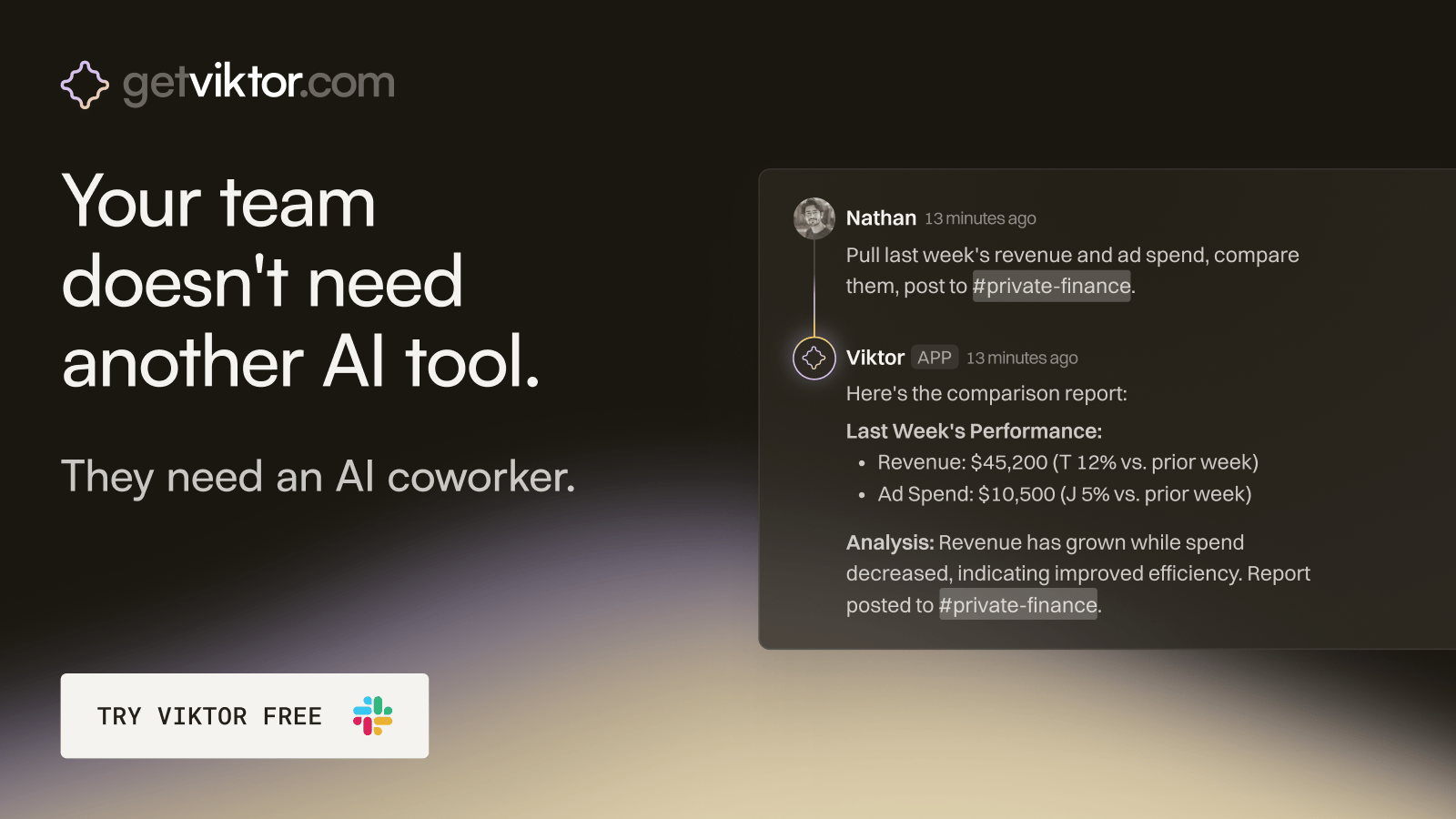
Viktor is an AI coworker that connects to your tools and ships real work. Ask Viktor to pull a report, build a client dashboard, or source 200 leads matching your ICP. Most teams hand over half their ops within a week.

You know the drill. One is AI, and one is real. Which is which?
A.

B.


May we direct you to the archive, if you’ve missed any??

Trivia answer: B is AI, and A is real. The creator said every clip was made with LTX 2.3 using real The Next Generation image screengrabs as visual references, plus this Star Trek TNG Style LTX 2.3 LoRA to lock in the look. Oh, and if you click that AI link… gotcha!
 | That’s all for now.
|
Grant Harvey is the Lead Writer of The Neuron, where he continues to lead the publication's daily coverage of AI news, tools, and trends.

Don't fall behind on AI. Get the AI trends & tools you need to know. Join 700,000+ professionals from top companies like Microsoft, Apple, Salesforce and more.
Property of TechnologyAdvice. © 2026 TechnologyAdvice. All Rights Reserved
Advertiser Disclosure: Some of the products that appear on this site are from companies from which TechnologyAdvice receives compensation. This compensation may impact how and where products appear on this site including, for example, the order in which they appear. TechnologyAdvice does not include all companies or all types of products available in the marketplace.
